
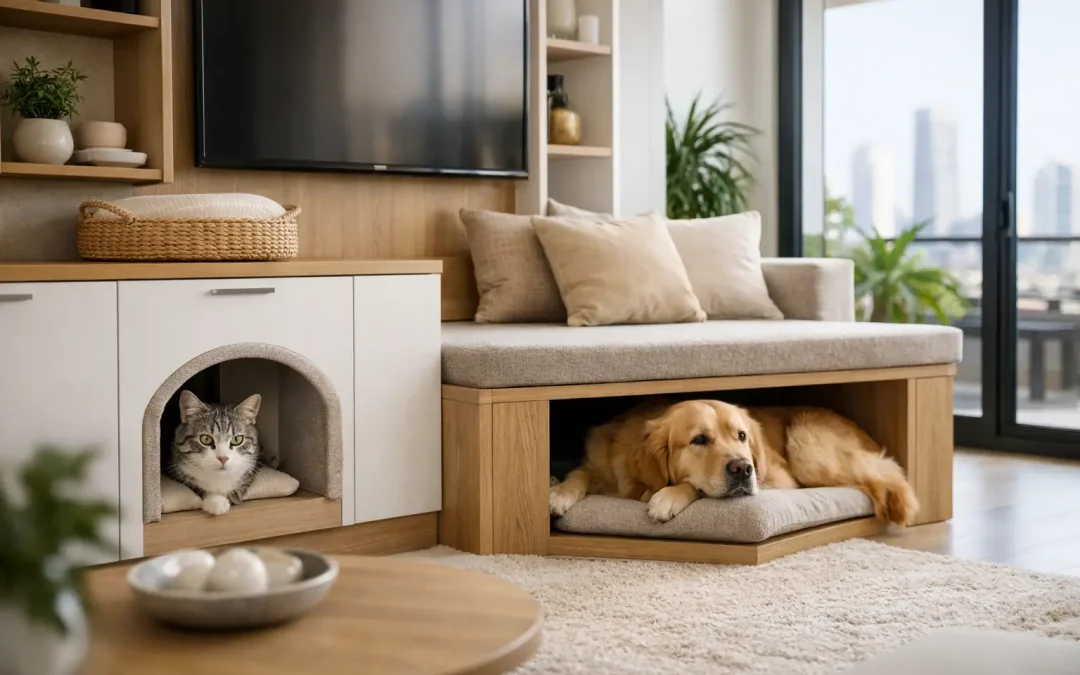
A scratched cabinet door beside the water bowl, fur gathering beneath a floating unit, or a litter tray awkwardly placed in the guest bathroom can make an otherwise beautiful home feel less considered. Pet-friendly built-in furniture resolves these daily compromises without turning a refined Dubai interior into a utility room. The right design gives pets a comfortable place of their own while protecting the finishes, circulation and visual calm that matter to the rest of the household.
For villas and flats alike, the best results come from considering pets at the earliest design stage. A bespoke joinery scheme can account for where your dog rests after a walk, where the cat prefers to perch, how food is stored, and how quickly surfaces need to be cleaned. These details are small individually, but they shape how a home works every day.
Start with the habits, not the furniture
There is no standard pet-ready layout because no two homes, or pets, are the same. A small indoor cat in a Downtown flat has very different needs from two energetic dogs in a family villa with a garden. Before selecting finishes or deciding where cabinetry should sit, consider the routines already happening in the home.
Where does your pet sleep during the day? Which entrance is used after outdoor walks? Is food prepared in the kitchen, utility room or pantry? Does the pet seek a quiet enclosed corner, or a raised spot with a view of family life? Answers to these questions create a proper brief for the joinery rather than adding a pet bed to an unused gap at the end of the project.
It also helps to distinguish between a pet area and a hidden pet area. Concealment can be useful for bowls, litter trays and supplies, but ventilation, access and cleaning must never be sacrificed for a neater elevation. A design should look effortless because it is well planned, not because it forces an animal into an impractical space.
Pet-friendly built-in furniture that earns its place
The most successful features tend to integrate naturally with rooms that already require storage. In a kitchen, a low pull-out drawer can hold feeding bowls and close away once mealtimes are over. This keeps bowls out of busy walkways and gives them a defined location, though it needs enough open space around it for a pet to eat comfortably.
A utility or laundry room is often the most practical location for larger feeding stations, washable beds and storage for leads, towels and grooming supplies. Bespoke cabinetry can include tall sections for bulk food, shallow drawers for medication and accessories, and a ventilated lower compartment for a bed. In Dubai homes, where sandy paws and damp towels can quickly travel through the house, a well-organised utility area can make a noticeable difference.
For cats, a built-in perch by a secure window can be more valuable than another decorative shelf. It should be deep enough to rest on safely, finished in a material that will tolerate claws, and positioned away from hot glazing where direct sun is intense. Where a cat route is required between shelving or higher resting spots, it must be designed as a stable sequence rather than a collection of narrow display ledges.
Under-stair joinery is another strong opportunity in villas. A calm sleeping nook can be incorporated behind a discreet opening, with a removable washable cushion and nearby storage for essentials. The space should not be too enclosed or difficult to reach. If your dog is older, large, or sensitive to noise, a ground-floor corner away from the main entrance may be a better choice than the under-stair area.
Litter tray cabinetry requires particular care. A dedicated cabinet can protect the appearance of a bathroom, utility room or hallway, but it needs a generous entrance, internal clearance, odour-conscious ventilation and a straightforward way for an adult to remove the tray. Materials around the base must tolerate moisture and regular cleaning. A beautiful cabinet that is unpleasant to maintain will soon become an expensive compromise.
Choose finishes for real life
Premium joinery need not be precious. The aim is to specify materials that retain their appearance despite claws, water splashes, fur and frequent wiping. Textured laminates, quality lacquer systems suited to the room, and durable stone or porcelain worktops can all be appropriate, depending on the design and level of use.
Matt finishes are often chosen for their understated appearance, but very dark matt surfaces can show paw marks and dust more readily than mid-tone colours or a subtle grain. High-gloss cabinetry wipes clean easily, yet may reveal scratches in high-contact areas. This is where a considered sample review matters. Looking at a finish under your own home’s lighting, and thinking honestly about how a pet moves through the room, is more useful than choosing solely from a showroom display.
At floor level, avoid delicate trim profiles where fur, dust and moisture can collect. Plinths should be sealed and resilient, particularly around water bowls. In a mudroom-style entrance or utility, a small tiled or stone-lined zone is often a sensible buffer between outdoor activity and timber-effect joinery. It is a practical choice that can still feel polished when the colours and proportions are coordinated with the wider interior.
Hardware deserves equal attention. Soft-close drawers reduce sudden noise around nervous pets, while strong runners are essential for heavy food storage. Handles should not protrude into a narrow route where an excited dog may catch a lead or brush past repeatedly. Handleless cabinetry can look exceptionally clean, but only if the opening method remains reliable and convenient with daily use.
Plan for cleaning, airflow and access
A pet-focused design should make cleaning quicker, not more complicated. Leave enough floor clearance beneath floating units for a vacuum or mop, unless the intention is to create a fully enclosed base. Where built-in beds are included, removable inserts and washable covers are far more practical than fixed upholstery.
Airflow is especially relevant in enclosed pet stations and litter areas. Discreet grilles, suitable internal finishes and well-positioned openings can help, but they should be designed around the specific location. A cabinet within a humid laundry room has different requirements from one in a dry air-conditioned hallway.
Access is the other detail often overlooked. Your pet needs an entrance sized for its body and movement, while you need comfortable access for cleaning, refilling and checking the space. A small arched opening may look charming in a visual reference, but it is not suitable if it means crouching awkwardly every day or if a growing dog will outgrow it within a year.
Keep the wider home in balance
Pet provision should not dominate every room. A luxury home works best when practical elements are located where they support family routines and disappear visually when not in use. In an open-plan kitchen, this may mean placing bowls within a pantry-adjacent run rather than at the island. In a living room, it might mean a tailored bench with a durable pet cushion at one end and concealed storage beneath.
The same principle applies outdoors. A shaded joinery element, storage bench or covered feeding point can support garden time, but exterior materials must be selected for heat, UV exposure and irrigation. What performs beautifully inside may not withstand a Dubai summer outdoors.
During a renovation, coordinating pet furniture with kitchen cabinetry, flooring, electrical points and ventilation avoids visible alterations later. Bespoke by SW Build approaches these decisions as part of the complete home, aligning the joinery with the room’s proportions, materials and everyday use rather than treating it as an afterthought.
A home designed around the people who live in it should also be comfortable for the animals who share it. Bring photographs, measurements and a clear picture of your pet’s routine to the design conversation, and let those practical details inform furniture that remains as elegant as it is useful.