
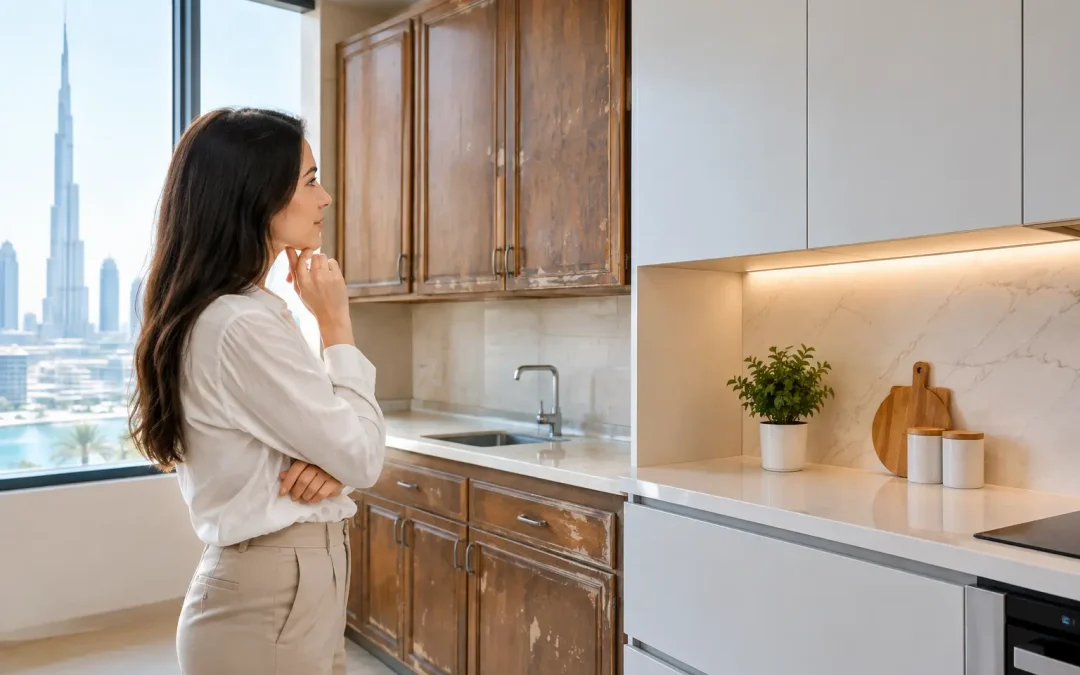
A kitchen can look tired long before it has truly failed. Equally, beautiful doors can conceal swollen cabinet bases, weak fixings or awkward storage that makes daily life harder than it needs to be. Knowing when to replace kitchen cabinets is therefore less about chasing the latest look and more about understanding what is happening behind the finish.
For Dubai homeowners, the decision often comes at the point where heat, humidity, busy family life and years of use have begun to show. The right answer may be a carefully planned replacement, but it may also be new doors, revised internal storage or a more considered refurbishment. The condition of the cabinet structure, the layout of the room and your plans for the property should lead the decision.
When to replace kitchen cabinets rather than refresh them
Cabinets should usually be replaced when the carcasses are no longer reliable. Doors, handles and worktops can be renewed relatively easily; compromised units cannot be made sound simply by improving what is visible.
Water damage is one of the clearest signs. Look beneath the sink, around the dishwasher and at cabinet plinths for swelling, flaking laminate, soft chipboard or a persistent musty smell. A minor leak caught quickly may only require a local repair. However, once moisture has entered several units or affected the floor beneath, replacement is often the more responsible long-term choice.
Movement is another warning. A door that needs adjusting is normal. Cabinets that pull away from the wall, shelves that bow under everyday loads, or drawers that repeatedly stick despite repair suggest that the units have reached the end of their useful life. In a premium kitchen, fittings should feel quiet, aligned and dependable – not something to work around every morning.
Replacement is also sensible when the existing layout no longer serves the household. A growing family may need deeper drawers, a dedicated pantry, improved recycling storage or a more practical breakfast area. For a flat owner, the priority may be to create a sharper, more valuable kitchen within a compact footprint. If meaningful improvements require moving units, appliances or services, retaining old cabinets can become a false economy.
Signs that a cabinet upgrade may be enough
Not every dated kitchen needs to be stripped out. If the cabinet boxes are dry, level, firmly fixed and built to useful dimensions, a selective upgrade can deliver an impressive change with less disruption.
Replacing doors and drawer fronts can alter the character of the room, especially where the existing layout works well. New handles, a refined worktop, updated splashback and considered lighting can make an otherwise sound kitchen feel entirely different. This route is particularly attractive for investment properties where the aim is to improve appeal without undertaking a full reconfiguration.
That said, refacing has limits. New fronts will not correct narrow drawers, poorly positioned appliances or inadequate ventilation. They also need to be compatible with the existing cabinet sizes and hinge positions. A professional survey should establish whether the carcasses are genuinely worth retaining before funds are committed to the cosmetic elements.
The cost of waiting too long
Homeowners sometimes postpone cabinet replacement because the kitchen remains technically usable. Yet small defects can become more expensive when left unchecked. A slow plumbing leak can damage neighbouring units and flooring. Poorly ventilated cabinetry around an appliance can encourage heat damage. Loose hinges and drawer runners put additional strain on the cabinet panels each time they are used.
There is also a daily cost to an inefficient kitchen. Limited preparation space, inaccessible corner cupboards and a lack of organised storage create friction in a room that is used constantly. In a villa where the kitchen supports family meals, entertaining and household routines, thoughtful joinery can have a greater effect on day-to-day comfort than many decorative upgrades.
For owners preparing to sell or let a property, an ageing kitchen may also influence perception disproportionately. Buyers and tenants often see cabinets as an indicator of how well the whole home has been maintained. A well-designed replacement does not guarantee a specific return, but it can make the property more competitive and easier to understand at a viewing.
Consider the kitchen as a complete system
Cabinets rarely fail in isolation. Before deciding on replacement, assess the worktop, plumbing, electrical provision, ventilation, appliances and flooring together. This avoids installing beautiful new joinery around unresolved issues.
For example, a change from a freestanding cooker to integrated appliances may require new electrical points, ventilation adjustments and carefully sized housing units. Moving the sink can affect plumbing routes, while adding an island may require floor power and changes to circulation. In blocks of flats and managed communities, some alterations may also need NOC support before work begins.
This is why a measured design process matters. It identifies what can be retained, what needs correcting and where investment will have the greatest impact. It also gives you a clearer picture of programme, material choices and budget before demolition starts.
Choosing bespoke cabinets for the way you live
A full replacement creates an opportunity to design around habits rather than standard cabinet sizes. That may mean deep drawers for cookware rather than low cupboards, a concealed breakfast station, tailored storage for entertaining pieces or a laundry zone that keeps household tasks out of sight.
Bespoke joinery is especially valuable in Dubai homes with unusual room proportions, tall ceilings or open-plan layouts. Cabinets can be sized precisely to walls, appliances and architectural features, reducing fillers and wasted gaps. The visual result is more composed, but the practical gain is just as important: every section of the kitchen has a purpose.
Material selection deserves equal attention. Cabinet finishes should suit the amount of natural light, the level of use and the wider interior palette. Matte finishes can feel understated and elegant but may show marks in high-touch areas; textured or timber-effect surfaces can add warmth but should be chosen with the overall scheme in mind. Internal hardware, edge detailing and moisture-resistant construction are less visible decisions that often determine how well the kitchen performs over time.
Plan replacement around your property and priorities
The best time to replace kitchen cabinets is often during a wider renovation, when flooring, wall finishes and services are already being considered. This can reduce duplicated work and allow the finished kitchen to feel fully integrated with adjacent living spaces.
It is not always necessary to wait for a whole-home project, however. If a leak, structural deterioration or poor layout is affecting everyday use, a focused kitchen renovation may be the right move. The key is to set a realistic brief from the start: which elements must improve, which features are desirable, and where are you prepared to invest for longevity.
A detailed site survey is the foundation of that conversation. Accurate measurements, an inspection of existing conditions and discussion of your ideas help turn saved images into a kitchen that can actually be built, used and maintained. At Bespoke by SW Build, this is approached as one managed process, from design and material selection through to installation and final handover.
The question is not simply whether your current cabinets look old. It is whether they still support the home you want to live in. When the answer is no, replacing them with well-planned, properly made joinery can make the kitchen calmer, more functional and distinctly yours.