
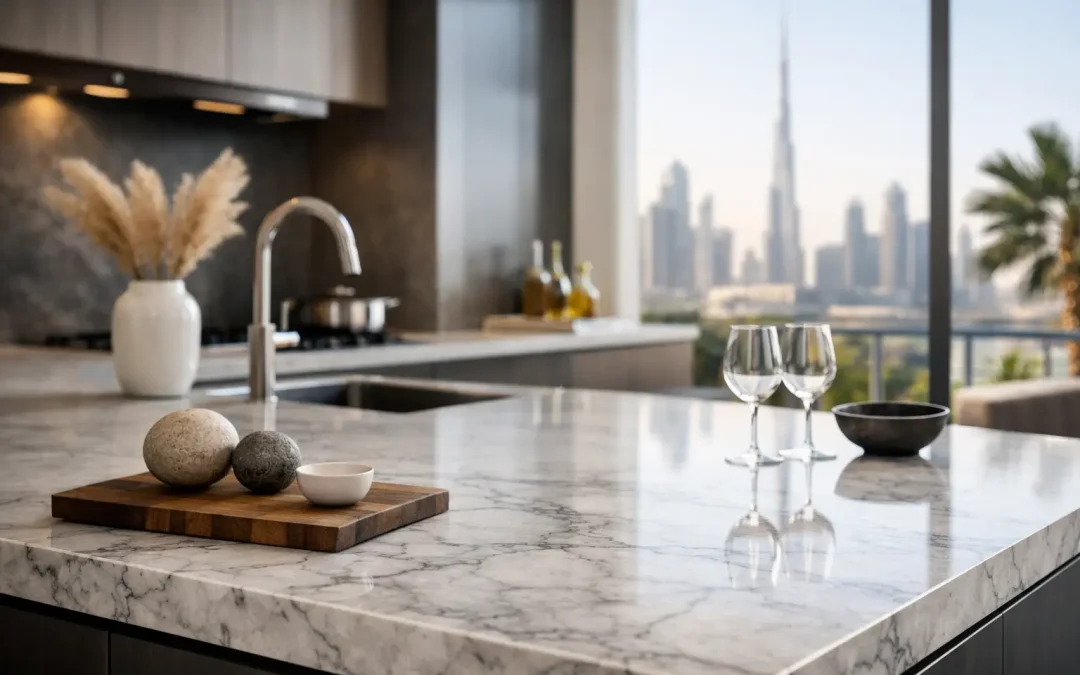
A worktop is the surface your kitchen will ask the most of. It carries hot pans, hurried breakfasts, food preparation, serving platters and the daily evidence of family life. When choosing premium kitchen worktops, the right decision is not simply about selecting the most expensive slab in the showroom. It is about finding a material that suits your design, your household and the realities of living in Dubai.
For a bespoke kitchen, the worktop also sets the visual standard for everything around it. Cabinet colours, splashbacks, lighting, handles and flooring all take their cue from its tone, movement and finish. Getting this element right early creates a calmer, more coherent design process later.
Start with how your kitchen will be used
A beautiful surface that does not suit your routine soon becomes a source of frustration. Before comparing samples, consider how the kitchen will work on an ordinary weekday, not only how it will look when newly installed.
A family kitchen with regular cooking, children and frequent entertaining needs a forgiving, durable surface with practical stain and scratch resistance. A statement kitchen in a city flat may place greater emphasis on refined detailing, bookmatched veining or a striking waterfall island. In a villa where the kitchen opens onto a garden or pool area, easy cleaning and resistance to tracked-in sand may be higher priorities.
There is no single best premium worktop. Natural stone offers character that cannot be exactly repeated, while engineered surfaces often bring consistency and lower maintenance. The best choice depends on how much variation you enjoy, how hands-on you want maintenance to be, and whether the kitchen is primarily a hardworking family space, an entertaining hub or both.
Choosing premium kitchen worktops by material
The material should be assessed in person, under good lighting, rather than from a small image alone. Veining, sheen and colour can appear very different across a full slab, especially in the bright natural light common in UAE homes.
Quartz for dependable everyday luxury
Quartz is an engineered stone surface valued for its consistent appearance, strong stain resistance and straightforward care. It is available in designs ranging from quiet whites and warm neutrals to convincing marble-inspired patterns, making it a versatile option for contemporary kitchens.
It is particularly well suited to busy households that want a polished result without the sealing requirements associated with some natural stones. However, quartz is not invulnerable. It should not be treated as a direct landing place for very hot cookware, and aggressive cutting can mark the surface. Heat protection and chopping boards remain sensible habits in any premium kitchen.
Porcelain and sintered stone for heat and performance
Porcelain and sintered stone worktops offer a crisp, modern look and impressive technical performance. They are highly resistant to heat, staining and UV exposure, which can make them an excellent fit for kitchens with strong daylight or connected outdoor entertaining areas.
Many homeowners appreciate their slim profile and large-format appearance. Yet the material needs experienced fabrication and fitting. Edge details, cut-outs for sinks and hobs, and handling during installation all demand precision. A lower-cost installation approach can undermine an otherwise exceptional material.
Marble and natural stone for individual character
Marble, granite and quartzite introduce depth, movement and a sense of permanence that engineered materials cannot fully replicate. Each slab is individual, which is precisely the appeal for clients who want their kitchen to feel considered rather than standardised.
Marble deserves an honest conversation. It can etch from acidic foods and drinks, and it may develop a gentle patina over time. For some homeowners, these marks become part of its character. For others, particularly in a high-use family kitchen, they can feel stressful. Quartzite can provide a similar natural-stone presence with greater hardness, though its care requirements and performance still vary by specific slab.
Granite remains a strong practical choice, particularly where durability and natural pattern are priorities. Its look can range from understated to dramatic, so slab selection is essential. Never assume a sample represents the exact stone that will be installed.
Solid surface and specialist finishes
Solid surface materials can create an exceptionally clean, joint-minimised look, particularly with integrated sinks and softly curved forms. They are often chosen for contemporary schemes where visual calm matters as much as a stone-like finish. They can be repaired in some circumstances, but they are generally less resistant to heat and scratches than stone-based alternatives.
For a distinctive project, metal, timber or textured surfaces may be introduced in selected zones rather than across the entire kitchen. A timber breakfast bar can soften a large stone island, while a stainless-steel preparation area may suit serious cooking. Mixing materials adds interest, but it needs a clear design rationale and carefully coordinated heights.
Look beyond the slab itself
Premium worktops are defined as much by specification and installation as by the material name. The thickness, edge profile, joins and transitions should all be resolved before fabrication begins.
A 20 mm stone profile can feel light and contemporary. A mitred edge can create the impression of a substantial 40 mm or deeper slab, bringing more visual weight to an island. Neither is automatically superior. Slim profiles often work well in modern flats and minimal kitchens, while deeper edges can give a larger villa kitchen a more architectural presence.
Consider where joins will fall. Large islands, L-shaped runs and bookmatched stone may require seams, but their placement can be planned to be discreet. The direction of veining matters too. It should run deliberately across the island and adjoining returns, not appear as an afterthought once the slab has been cut.
Sink and hob details deserve equal attention. An undermounted sink creates a clean line and makes wiping down easier, but the cut-out must be accurately finished and sealed. Drainer grooves, flush-mounted hobs and integrated pop-up sockets can enhance usability, provided they are coordinated with the chosen material and cabinet structure.
Account for Dubai light, heat and lifestyle
Dubai homes create particular design considerations. Strong sunlight can alter how pale worktops read during the day, while dark surfaces may show dust, fingerprints or water marks more readily. A sample that looks warm grey in a showroom can appear much cooler beside floor-to-ceiling glazing.
Take larger samples into the space where possible and view them alongside cabinet finishes, flooring and splashback options. Consider the kitchen lighting after dark as well. Warm LED lighting can flatter a creamy stone, while cooler lighting may sharpen the look of a clean white porcelain.
If the kitchen links directly to an outdoor terrace, ask whether the selected material is suitable for UV exposure and temperature changes. Indoor and outdoor surfaces do not always perform in the same way. Consistency can be attractive, but it should never come at the expense of appropriate specification.
Balance maintenance with expectations
The most successful choice is one you will be comfortable living with. Natural stone may need periodic sealing and a more considered approach to spills. Quartz is generally easier to care for but still benefits from sensible use. Porcelain is highly resilient, although its edges should be protected from hard impacts.
Ask practical questions before committing: Can red wine, turmeric, lemon juice or cooking oil leave a mark? Is sealing required? What cleaning products should be avoided? How should a chip or scratch be handled? A premium supplier should provide clear care guidance rather than vague assurances.
It is also worth recognising that a worktop is part of a wider kitchen system. Heavy stone requires suitable cabinet support, accurately levelled bases and careful site measurement after cabinetry is in place. Rushing fabrication before final dimensions are confirmed is an avoidable risk.
Make the final decision with full samples and clear costing
A transparent proposal should identify the exact material, slab quantity, thickness, edge treatment, cut-outs, upstands, splashbacks and installation scope. This prevents the common disappointment of discovering that a feature seen in a showroom display is treated as an additional cost.
Where natural stone is involved, view and approve the actual slabs whenever possible. Discuss which areas will be used for the island, main runs and splashback so the most distinctive sections are placed where they will have the greatest impact. This is particularly important with heavily veined marble and quartzite.
At Bespoke by SW Build, worktop selection is considered alongside joinery, appliances and the way the kitchen will be used, rather than as an isolated purchase. That joined-up approach helps ensure the final surface is not only impressive on handover day, but properly supported, precisely fitted and suited to daily life.
The right worktop should make your kitchen feel easier to use and more personal to own. Choose the surface you will enjoy seeing in the morning light, trust during a busy dinner party and still appreciate after years of real use.