
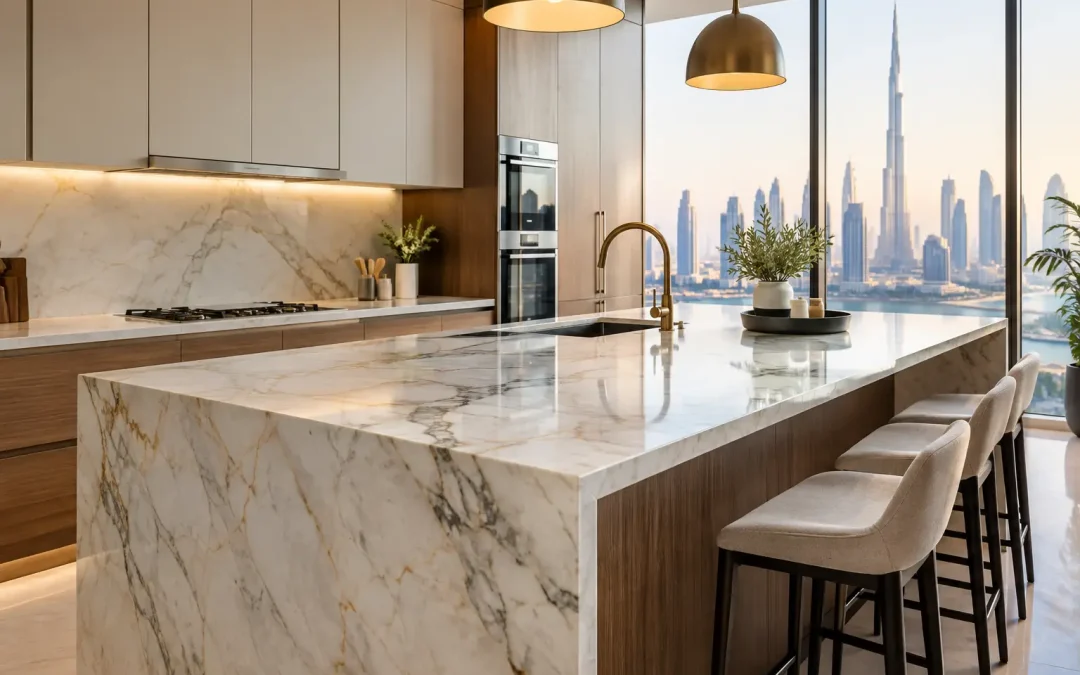
A kitchen worktop is where design meets real life. It frames the cabinetry, carries the visual weight of the room and must stand up to hot pans, family breakfasts, food preparation and regular cleaning. For Dubai homeowners, premium worktops also need to suit the region’s bright light, warm climate and the way an open-plan home is used.
The right choice is rarely simply the most expensive slab in the showroom. A beautiful surface should suit your cooking habits, the level of maintenance you are comfortable with, the cabinetry beneath it and the details that make a bespoke kitchen feel properly resolved. That includes edge profiles, splashbacks, sink cut-outs, joints and how the material flows across an island.
What makes a worktop genuinely premium?
Premium is not just a label applied to a material. It is the combination of quality, specification and installation. A carefully selected surface can look exceptional in a sample, yet feel disappointing if the proportions are wrong, the joins are prominent or the installation has not accounted for movement, support and appliance requirements.
A premium worktop should bring together four things: a considered appearance, suitable performance, accurate fabrication and a finish that complements the rest of the kitchen. This is why material selection should happen alongside the kitchen design, rather than as a last-minute decision once units have already been ordered.
In a villa kitchen, a large island may call for a dramatic veined porcelain or natural stone slab that becomes a focal point. In a compact flat, a pale quartz worktop and matching upstand can make the room feel calmer and more spacious. Neither approach is automatically better. The strongest result is the one that suits the property and the people using it.
Choosing premium worktops for Dubai homes
Dubai kitchens often benefit from durable, low-maintenance materials, particularly in homes with busy family life or frequent entertaining. However, practical does not need to mean plain. Today’s high-quality surfaces offer convincing natural movement, soft matt finishes and refined colours that work equally well with warm timber, painted cabinetry and contemporary metal details.
Quartz: dependable and design-led
Quartz remains a popular choice for tailored kitchens because it is consistent, hardwearing and available in an extensive range of colours and patterns. It is an engineered material, generally made from natural quartz combined with resins and pigments, which gives manufacturers close control over the finished appearance.
For many households, quartz offers the right balance of luxury and ease. It is non-porous, so it does not usually require sealing, and it handles everyday spills well. This makes it particularly practical around sinks, breakfast bars and family cooking zones.
There are limits to consider. Quartz can be affected by intense heat, so hot cookware should not be placed directly on the surface. Strong, direct sunlight can also be relevant for worktops close to expansive glazing. A good designer will assess the kitchen layout and recommend a finish appropriate to the location, rather than assuming one material suits every area.
Porcelain and sintered stone: refined performance
Porcelain and sintered stone surfaces are increasingly specified for high-end kitchens. They offer a crisp, contemporary look and can replicate marble, limestone, concrete and metal with impressive realism. Their resistance to heat, scratching and UV exposure makes them particularly appealing in Dubai properties, including kitchens that connect to terraces or outdoor entertaining areas.
These materials are also well suited to creating continuity. The same surface can often be used for the worktop, splashback and island cladding, producing a clean architectural effect with fewer competing finishes.
Their strength does not remove the need for care during fabrication and fitting. Large-format slabs require skilled handling, precise support and well-planned cut-outs, especially around undermounted sinks and hobs. The result can be remarkably elegant, but it depends on experienced measurement and installation.
Natural stone: character that cannot be copied
Marble, granite, quartzite and limestone offer genuine variation formed over time, rather than repeated by a production process. Each slab has its own veining, depth and tonal changes. For homeowners who want a kitchen with a distinct sense of individuality, natural stone can be difficult to match.
Quartzite and granite are often chosen where durability is a priority, while marble is valued for its unmistakable character. Marble does require a more relaxed attitude to use. It can etch or mark with acidic foods and drinks, and it needs sealing and ongoing care. For some clients, that lived-in patina is part of its appeal. For others, especially in a heavily used family kitchen, a marble-look porcelain may provide the desired appearance with fewer concerns.
The key is honest guidance. A premium material should fit your expectations for daily living, not create unnecessary anxiety every time someone makes a cup of tea or prepares a meal.
The details that change the finished kitchen
Worktop choice is only part of the decision. The details around it determine whether the kitchen feels standard or tailored to the home.
Thickness can dramatically alter the look. A slim porcelain profile suits a minimal, contemporary scheme, while a thicker stone edge gives an island greater presence. Mitred edges can create the appearance of a substantial block of stone without the visual heaviness or material cost of a fully solid thickness.
Edge detailing matters too. A square polished edge feels crisp and modern; a softened profile can be more forgiving in family spaces; and a shaped edge may complement a more traditional kitchen. These choices should relate to cabinet door styles, handles and the wider architecture of the property.
Splashbacks deserve the same attention. Continuing the worktop material up the wall can make a kitchen feel more cohesive, particularly behind a hob. Alternatively, a carefully selected tiled splashback can introduce colour or texture while allowing the worktop to remain the quiet foundation of the scheme.
Joints should be considered early, especially on long runs and large islands. Every slab has practical size limits. Thoughtful planning can place joins where they are less noticeable and make the natural pattern read well across the surface. This is particularly important with heavily veined stone, where poor slab layout can interrupt the movement that made the material attractive in the first place.
Match the surface to how you live
The best material depends on what happens in your kitchen from morning to evening. A household that cooks extensively may prioritise heat resistance and easy cleaning. A property intended for rental or resale may benefit from a durable, broadly appealing quartz or porcelain finish. A homeowner creating a showpiece entertaining kitchen may choose natural stone for its one-off character, accepting the maintenance that comes with it.
Consider the areas around the worktop as well. An undermounted sink creates a clean, practical line and makes wiping down easier, but it needs careful fabrication. Drainer grooves can be discreet and useful, although they must be accurately cut to avoid becoming difficult to clean. Hob placement, pop-up sockets, waterfall ends and breakfast-bar overhangs all require the worktop fabricator, joiner and project manager to work from the same approved drawings.
This coordination is where an end-to-end renovation approach adds value. Rather than treating cabinetry, surfaces and services as separate trades, the kitchen can be planned as one finished environment. At Bespoke by SW Build, this means aligning the selected material with the bespoke joinery, technical requirements and installation sequence before work begins on site.
A better way to select your worktop
A showroom sample is a useful starting point, but it is only a small section of the final material. View full slabs wherever possible, particularly with natural stone or large-format porcelain. Look at the slab in different light, assess the scale of its pattern and discuss which areas will be used for the island, main run and splashback.
Bring the cabinet finish, flooring sample and key hardware choices into the conversation. A warm off-white worktop may look entirely different beside cool grey cabinetry than it does with oak veneer. Good selection is about contrast and balance, not choosing every finish independently.
It is also sensible to agree what is included in the specification. Confirm the material, thickness, edge treatment, number and location of cut-outs, splashback details, upstands, templating, delivery and installation. Clear information protects the budget and gives everyone a shared standard for the finished result.
A worktop will be touched more than almost any other surface in your home. Choose one that looks exceptional on day one, but also makes everyday cooking, hosting and family life feel easier for years to come.